

Top 10 Fashion AI Prompts for Men’s High-End Editorial Shoots and Avant-Garde Style
Men's high-end editorial photography demands more than a sharp suit—it requires a precise vision that blends wardrobe, lighting, and attitude into a single frame. This collection of ten AI image prompts delivers that vision, offering a curated runway of looks that range from raw athletic power to futuristic holographic glamour.
Each prompt is built to generate striking, magazine-grade portraits with realistic textures and cinematic depth. Whether you are crafting content for a fashion portfolio, social media campaign, or personal brand, these prompts give you a direct path to images that feel expensive, intentional, and unmistakably modern.
What this men's editorial collection is asking for
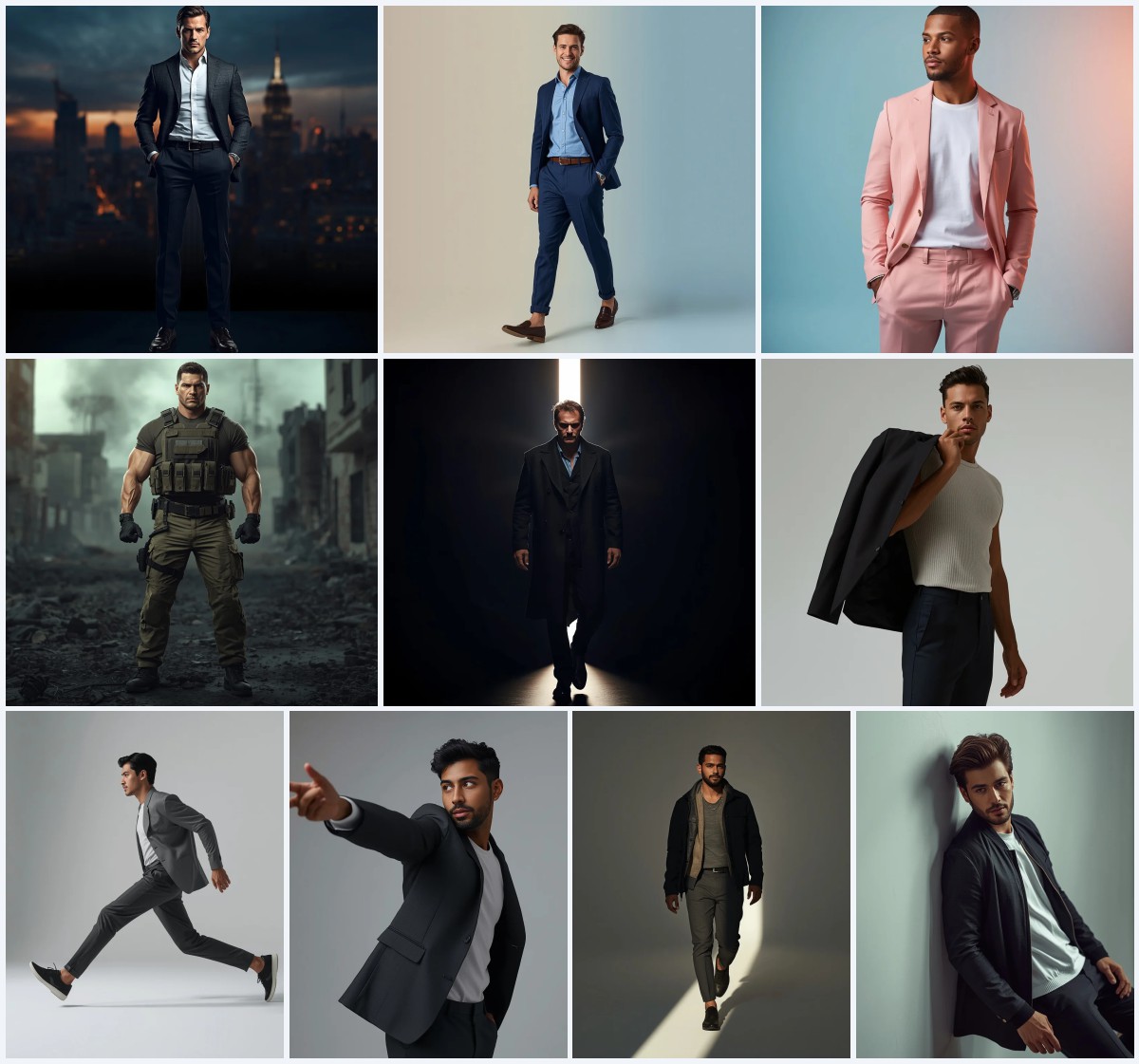
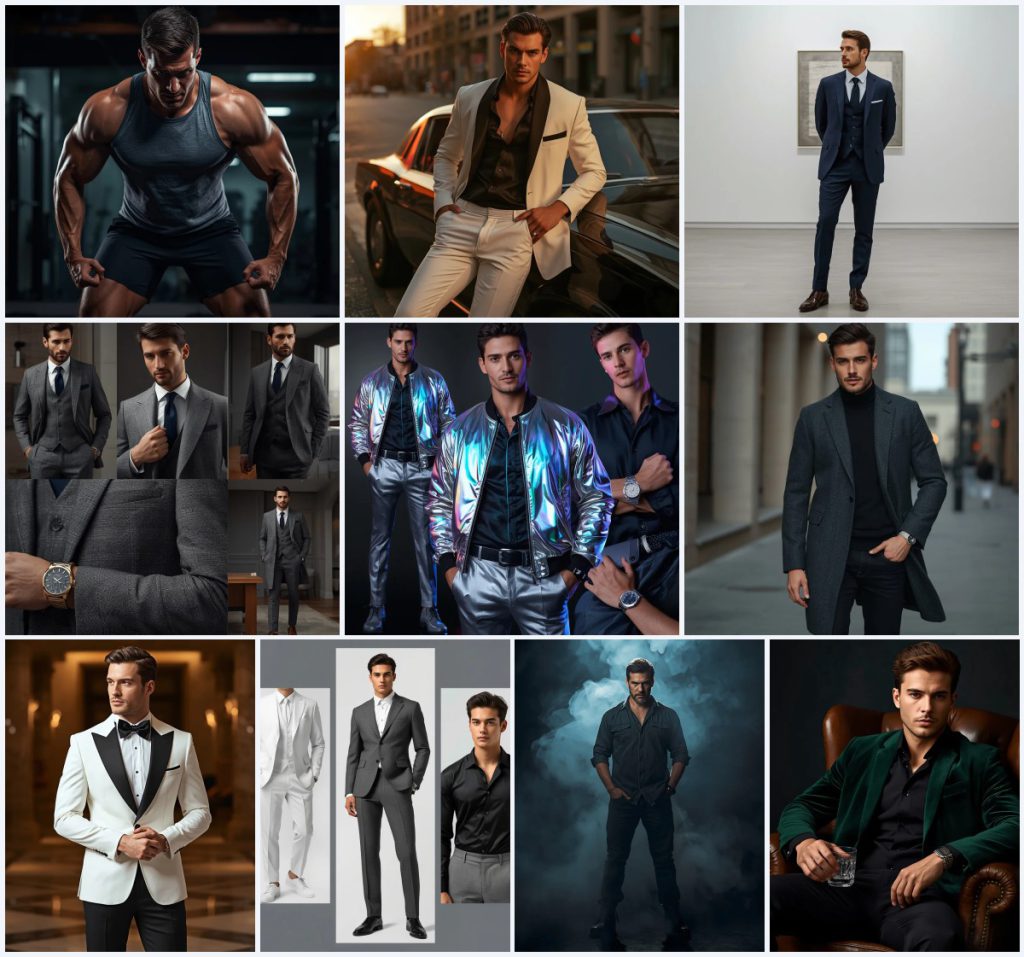
This set of ten prompts calls for high-contrast, fashion-forward portraits of men in carefully styled outfits and environments. Every image emphasizes texture, lighting, and a strong masculine presence, whether the subject is mid-workout, leaning against a vintage car, or standing in a minimalist gallery.
- A tailored navy three-piece suit in a minimalist art gallery
- A white tuxedo blazer with black satin lapels in a luxury hotel lobby
- An iridescent silver bomber jacket with holographic glow effects
- A charcoal grey wool overcoat over a black turtleneck on a concrete street
- Beads of sweat and intense focus during a modern gym workout
- An emerald green velvet blazer paired with a crystal glass in a dim lounge
The visual world these prompts build
The collection moves through distinct, carefully lit spaces that define each look. One prompt places a man "leaning against a vintage sports car on a city street at sunset," where "golden hour light casts warm reflections on the car and his outfit." Another pulls the subject into a "moody, dimly-lit lounge" where "low-key lighting highlights the soft, luxurious texture of the velvet."
Contrast drives the atmosphere across the set. A gym scene uses "harsh, direct gym lighting" to emphasize muscle definition, while a smoky environment relies on "dramatic backlighting from a single strong light source" to create a powerful silhouette. These clauses anchor each image in a specific, repeatable mood that AI generators can interpret with striking consistency.
Why these prompts work for high-end men's editorials
These prompts succeed because they combine precise fashion terminology with cinematic scene directions that guide the AI toward a cohesive, professional result. The language is specific enough to avoid generic outputs yet flexible enough to allow creative interpretation by different image generators.
- Strong lighting cues like "golden hour" and "low-key lighting" ensure dramatic, magazine-quality contrast in every image.
- Detailed outfit descriptions such as "textured three-piece grey suit" give the AI clear texture and color references to render fabrics realistically.
- Pose and expression notes like "one hand is in his pocket while the other adjusts his cuff" inject natural, editorial body language into the portraits.
Three style directions inside this collection
The ten prompts explore three distinct style directions that cover the spectrum of modern men's editorial photography. Each style stays within the boundaries of the collection, offering a different visual language without asking you to step outside the provided prompts.
- Cinematic realism: Prompts like the man in a charcoal grey overcoat walking down a clean city street use natural evening light and an 85mm prime lens for a film-like, candid feel.
- Avant-garde collage: The futuristic holographic collage and the monochromatic diamond-cut panel collage layer multiple outfits and poses into a single, graphic editorial spread.
- Raw athletic aesthetic: The gym workout prompt and the smoky intense gaze prompt strip away polish to focus on sweat, muscle, and dramatic backlighting for a grittier, high-energy look.
How to generate these men's fashion portraits step by step
Generating a polished editorial portrait from this collection follows a straightforward workflow that works across all major AI image tools. The key is to treat each prompt as a complete scene brief and to pair it with a well-chosen reference photo when the platform supports it.
- Copy the full prompt text. Select one prompt from the collection and copy it exactly, keeping all clothing, lighting, and pose details intact.
- Upload a reference photo. If your tool allows image uploads, add a photo that matches the described pose and lighting direction to guide the AI's composition.
- Generate the first batch. Run the prompt and review the initial results for overall mood, outfit accuracy, and background coherence.
- Check hands and face. Zoom in on the subject's hands and facial features. Look for extra fingers, asymmetrical eyes, or distorted expressions and flag any images that need regeneration.
- Inspect the main outfit. Verify that the suit, blazer, or overcoat matches the described color, texture, and fit. Pay attention to lapels, fabric sheen, and accessories like watches or cufflinks.
- Refine and upscale. Adjust the prompt slightly if details are off—for example, reinforce "tailored navy three-piece suit"—then upscale the best result to full resolution.
Choosing the right reference photo for these prompts
A strong reference photo dramatically improves the AI's ability to nail the pose, lighting, and overall composition described in these prompts. The reference does not need to match the outfit; it should match the body language and light direction.
- Use a photo with similar pose structure—for the gym prompt, find an image of a man mid-exercise with visible muscle tension and forward focus.
- Match the lighting quality, not the location. A reference with harsh side light works for the smoky intense gaze prompt even if it was shot indoors.
- Avoid references with busy backgrounds. A clean, uncluttered frame helps the AI concentrate on the subject's posture and expression.
AI tools that handle these fashion prompts well
Different AI image generators interpret fashion prompts with varying levels of realism and texture fidelity. The table below compares four popular tools and how they handle the specific demands of this men's editorial collection.
| Tool | Access | Typical realism | Useful here for |
|---|---|---|---|
| ChatGPT | Free and paid tiers | Good, with strong prompt adherence | Rendering the emerald green velvet blazer's soft texture accurately |
| Google Gemini | Free and paid tiers | Very good, photorealistic output | Capturing the golden hour reflections on the vintage sports car |
| Leonardo AI | Free and paid tiers | Excellent, highly detailed | Building the futuristic holographic collage with neon-blue thread glow |
| Midjourney | Paid only | Exceptional, cinematic quality | Delivering the dramatic backlighting silhouette in the smoky environment scene |
Three tips to get the most from these men's style prompts
Small adjustments to how you run these prompts can lift the output from good to gallery-ready. The tips below focus on real materials and objects named in the collection to keep your results grounded in the intended aesthetic.
- Emphasize fabric textures in your negative prompts if the AI struggles. For the white tuxedo blazer, add "no matte finish" to preserve the satin lapel sheen.
- When generating the charcoal grey overcoat look, set the aspect ratio to portrait orientation to match the walking pose and the vertical lines of the concrete buildings.
- For the gym workout prompt, increase the weight of "beads of sweat" and "muscle definition" in your tool's prompt emphasis settings to sharpen the raw power aesthetic.
Common issues and quick fixes for these prompts
Even well-crafted prompts can produce unexpected results. The table below lists four issues that frequently appear with this collection and the specific changes that correct them without altering the core scene.
| Issue | What to change |
|---|---|
| The navy three-piece suit reads as black or dark grey | Add "vivid navy blue fabric, well-lit to show true color" to the prompt |
| The holographic bomber jacket loses its iridescent effect | Increase mention of "iridescent silver" and add "visible color-shift reflections" |
| Facial features appear distorted or asymmetrical in close-up portraits | Reduce the prompt's overall complexity for that generation and add "symmetrical face, sharp focus on eyes" |
| The gym background overpowers the subject | Reinforce "blurred gym equipment and industrial architecture" and use a lower CFG scale |
Frequently Asked Questions
Can I mix elements from different prompts in this collection?
Yes, the prompts are designed to be modular. You can take the lighting description from the smoky intense gaze prompt and apply it to the emerald green velvet blazer scene to create a new mood while keeping the outfit intact.
Do these prompts work for generating images of men with different ethnicities?
Absolutely. The prompts describe clothing, lighting, and poses but do not lock in specific facial features. You can add an ethnicity descriptor or use a reference photo to guide the AI toward the look you want.
Which prompt works best for a beginner testing AI fashion generation?
The monochrome western theme outfit with the vintage sports car is an excellent starting point. The sunset lighting is forgiving, the outfit is simple but striking, and the scene has a clear focal point that most AI tools handle well.
Conclusion
This collection of ten men's fashion AI prompts covers the full range of high-end editorial style, from minimalist gallery sophistication to raw gym intensity and futuristic collage art. Each prompt is a self-contained creative brief that gives you control over the final image while leaving room for the AI to deliver surprising, professional-quality results. By following the scene directions, choosing the right reference photo, and applying the tool-specific tips, you can build a striking portfolio of men's portraits that feel cohesive, expensive, and unmistakably editorial.
Remember to only edit and share images you have the right to modify, especially when using reference photos or generating content for commercial fashion projects.